Communication Capabilities in a Tech-driven World
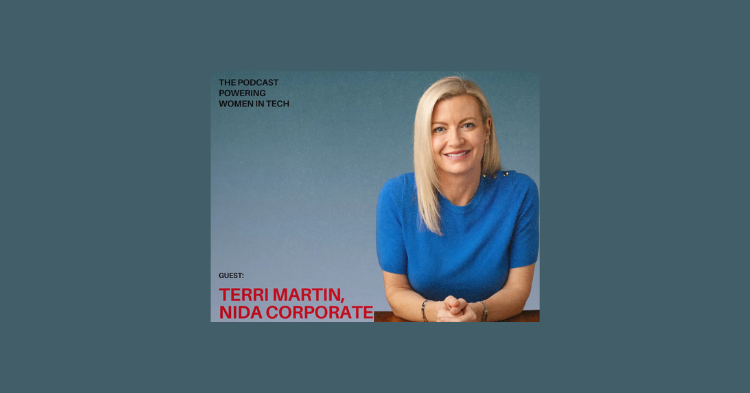
Communication is often treated as a secondary or “soft” capability rather than a core leadership discipline. Yet, as explored in a recent episode of Femmebot: The Podcast Powering Women in Tech featuring Terri Martin, Head of NIDA Corporate Training, this mindset comes at a measurable cost to organisations.
The podcast focuses on women shaping their industries and the human side of technology. A recurring theme explored in the podcast is how AI is being utilised and how people lead, think and communicate in a tech-driven world.
One of the most striking insights from the discussion is that many leaders believe they are effective communicators. In reality, there is often a gap between intent and impact. Leaders may feel they are being clear, while teams experience ambiguity, inconsistency, or disengagement. As Martin puts it, “There’s a real blind spot between what we intend to communicate and the impact it actually has on others.”
The Hidden Cost to Culture and Performance
Poor communication never appears on a balance sheet, but its effects are tangible. When expectations are unclear or messages are poorly delivered, teams fill in the gaps themselves. This often leads to misinterpretation, duplicated work, or disengagement.
As discussed in the episode, if leaders don’t communicate clearly, people will create their own narratives. Martin reinforces this, noting that “in the absence of clear communication, people don’t stay neutral, they make meaning, and often that meaning isn’t aligned with your intent.”
For organisations, the impact of poor communication can be costly, as it can result in reduced employee alignment with business goals, lower trust and morale, and missed opportunities in performance and innovation.
The AI Question: What Are We Losing?
The conversation around the “AI question” shifts the focus from what AI can do to what it might be quietly undoing. While AI offers clear gains in efficiency, helping us draft, structure and refine ideas, it also introduces a subtle risk: the erosion of our own communication capability.
Martin frames it succinctly: “If we stop doing the thinking ourselves, we lose the ability to communicate with clarity and conviction.” Like any muscle, communication weakens when it’s not actively used. Over-reliance on AI can dull clarity of thought, reduce confidence in spontaneous interactions, and limit the depth of human connection.
The tension isn’t about rejecting AI, but about how we use it. As Martin suggests, “AI should support our thinking, not replace it. The human skill of communication is still what builds trust.”
Communication as a Commercial Skill
NIDA Corporate Training addresses these challenges by positioning communication as a core commercial capability, equipping leaders and teams with the practical skills to influence outcomes, build trust, and drive performance. Through experiential, practice-led training, participants learn to communicate with clarity, authenticity, and impact across high-stakes business contexts.
As Martin emphasises, “Communication isn’t just a soft skill, it’s a business skill. It directly impacts how effectively you lead, influence, and deliver results.”
Why This Matters Now
In an environment where organisations are navigating constant change, effective communication becomes the stabilising force. It shapes how strategy is understood, how culture is experienced, and how people choose to engage.
This podcast offers a timely and valuable perspective for anyone responsible for leading people or shaping workplace culture.
Listen to the full podcast here: https://bit.ly/4tGygld